"Greed"
Economics concept #11


It’s time for the first addressing-common-misconceptions post. When we talk about market equilibrium, or even trade itself, one of the questions/accusations that frequently comes up is “so economics says that greed is okay?” After all, we’re talking about buyers wanting the lowest price possible and sellers wanting the highest price possible. Self-interest versus self-interest on a large scale, with the equilibrium emerging as a result.
The answer to the question is no. There are two reasons for that, one specific and one general. The specific reason is that it’s misleading to call self-interest “greed.” We know that self-interest leads people to make decisions that they expect to maximize their utility. But remember, utility doesn’t only come from having lots of stuff that we like – it comes from anything that makes us happy. And the vast majority of people get some utility from making other people happy. Someone who derives no utility from seeing others better off is a selfish person. However, the selfishness is a problem with them, not with self-interest itself.
The general reason, and I would say the more important one, is that economics isn’t about what’s “okay.” The goal of economics is to describe and make sense of what people do in certain situations, not to determine what’s right and wrong. This is true of any science, whether it’s a social science like economics or a natural science like biology. Biology can explain why your cat must have adequate nutrition to be healthy; understanding that starving your cat would be wrong is something you have to do on your own. Physics can describe the acceleration of an object in free fall from a particular height; knowing not to throw bricks at people out of a third-story window is your job. Economics is like that: descriptive, not prescriptive.
What about altruism? It’s not discussed much in economics because while it’s common within social relationships, it’s not expected in most markets. But let’s imagine for a moment that in the farmer’s market where Bob and Alice sell carrots, someone who clearly hasn’t been eating enough goes from booth to booth asking if sellers can spare a few pieces of their goods. Chances are that the majority of them will be willing to help. Even for the most selfish whose consciences wouldn’t motivate them, being seen turning down a needy person could incur the disapproval of the community and make people less likely to trade with. Social pressure can be a force for good just as it can for bad. And the effect of these donations is a tiny reduction in supply, so while the individual effect on the recipient could be enormous, the overall economic effect is small enough to simply disregard.
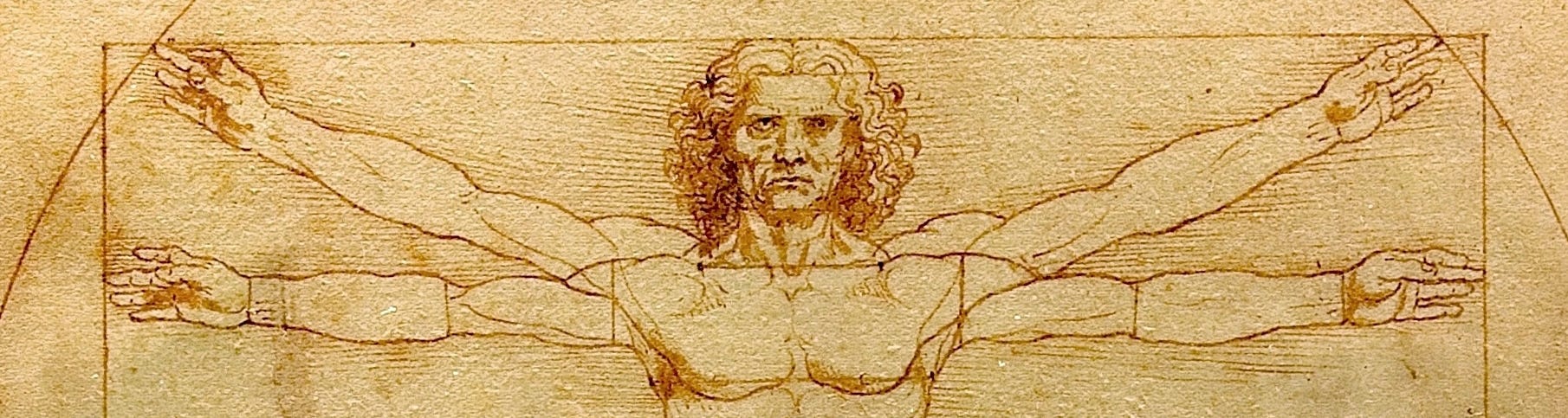
A related misconception is that economics assumes the existence of “homo economicus,” a form of human that’s perfectly rational, perfectly informed, and motivated solely by accumulating or consuming as much value as possible in the form of goods and services. Economics as a science doesn’t do that, but unfortunately economics textbooks and economists often gloss over everything but goods and services as incentives. This is understandable, since goods and services are the most common and most easily measured uses of resources, but it’s still not the complete story. People want to be happy, not just to have as many goods and services as possible. A great example is the ultimatum game, where actual human behavior doesn’t line up with “homo economicus” expectations.
“Greed” in an economics-related discussion is usually a way to avoid acknowledging economics entirely, by making an accusation which the other party is expected to address. Is a buyer unwilling to pay as much as I think they should? Greed. Is a seller unwilling to accept as low of a price as I think they should? Greed. Is anyone being less altruistic than I imagine being in their situation, even if I don’t fully understand it? Greed. In other words, my feelings determine what’s right and wrong, whether I’m in possession of (or even interested in) all the facts or not. But that’s not economics, or even good reasoning.
Economics is a useful tool, but like all tools, it’s better for some things than others. If we use it for the wrong job, well, that’s on us.